
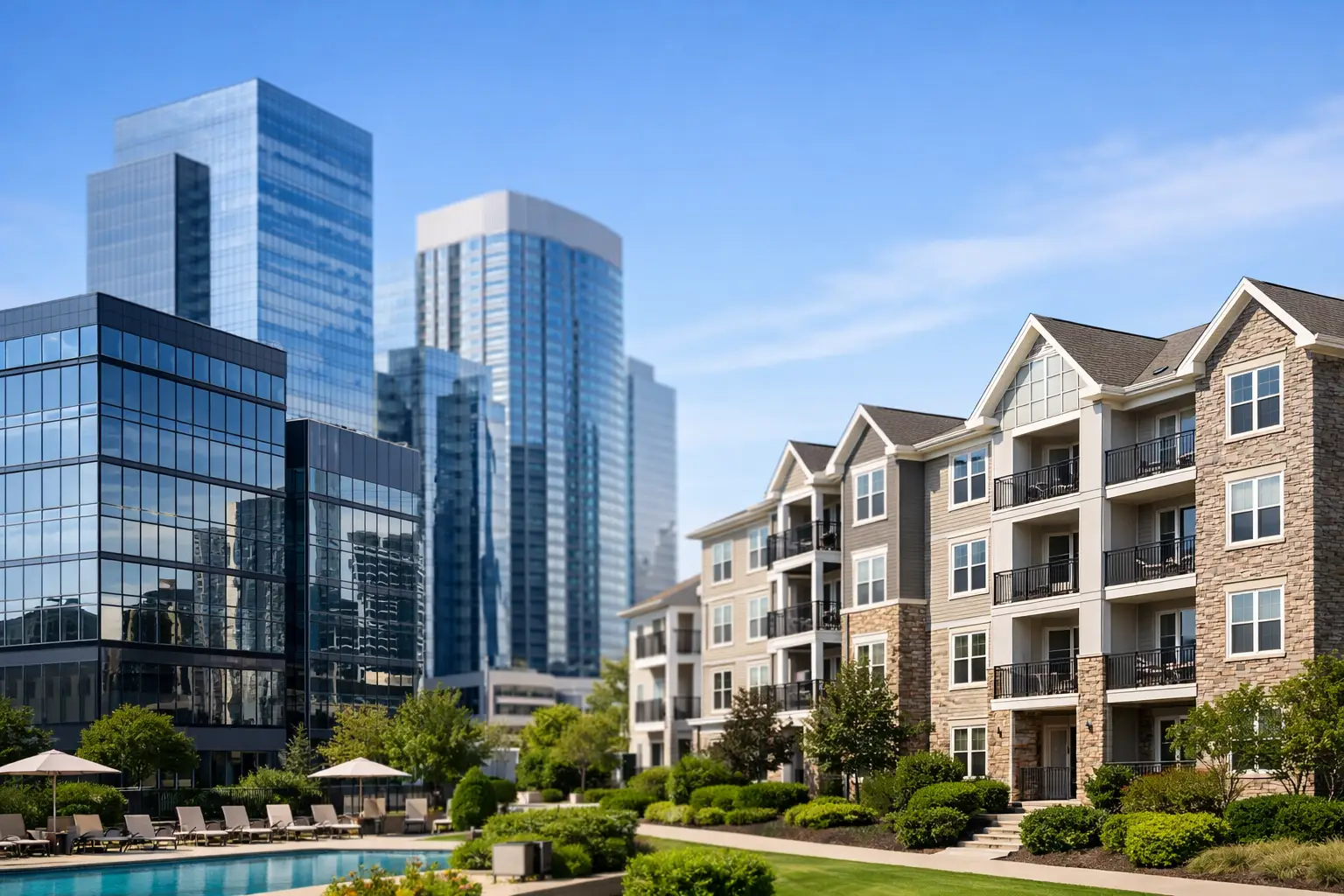
A block of serviced apartments, a boarding house, student accommodation, a hotel with long-stay rooms – they all involve people living on site, but they are not treated the same way as an ordinary house or unit. That is usually where the confusion starts when clients ask, what is commercial residential property?
In plain terms, commercial residential property is property used to provide accommodation to the public in a way that operates more like a business than a private home. The key issue is not simply whether someone sleeps there. It is how the property is used, who it is offered to, and whether the operation has the features of commercial accommodation.
For buyers, sellers, landlords, developers and investors in New South Wales, that distinction matters. It can affect GST treatment, land tax, planning approvals, financing, leasing arrangements and the legal obligations that apply to the premises.
What is commercial residential property in practical terms?
The phrase is most commonly used in tax and property law contexts to describe premises such as hotels, motels, inns, hostels, boarding houses, caravan parks, camping grounds and similar accommodation businesses. Depending on the facts, it can also extend to some serviced apartment operations, student accommodation and retirement-style accommodation models, although those examples are not automatic. Classification depends on the actual use and structure of the operation.
What separates commercial residential property from ordinary residential property is the commercial character of the accommodation. A standard residential investment property is generally leased to a tenant who treats it as their home. Commercial residential property is usually run as accommodation for multiple occupants or guests, often with central management, shorter stays, shared facilities, reception-style services, or business systems for booking and occupancy.
That sounds straightforward, but in practice there are grey areas. A duplex rented to two long-term tenants is usually just residential property. A large boarding house with rotating occupants, house rules, common kitchens and active on-site management may be commercial residential property. A serviced apartment can fall either way depending on how the building and units are owned, managed and supplied.
Why the classification matters
People often assume this is just a technical label. It is not. If a property is classified as commercial residential property, the legal and financial consequences can be significant.
GST is often the first issue. The sale or lease of ordinary residential premises is treated differently from the sale or supply of commercial residential premises. That can affect whether GST applies, whether input tax credits may be available, and how a transaction should be structured. Getting this wrong can be expensive, especially where a contract has already been signed on assumptions that do not hold up.
Planning and zoning also matter. In NSW, whether a site can lawfully operate as a boarding house, hotel, serviced apartment complex or other accommodation business depends on the relevant environmental planning instruments, council controls and, in some cases, development consent conditions. A property might physically suit a use, but that does not mean the use is approved.
Financing is another practical issue. Lenders often assess commercial residential property differently from a standard home or residential investment unit. Loan terms, valuation methods, deposit requirements and serviceability analysis can all change where the income depends on business-style occupancy rather than a conventional residential lease.
Then there is the day-to-day legal framework. Residential tenancy law may apply in some situations, but not all. Occupancy agreements, management agreements, building compliance obligations, fire safety standards and local operational requirements may also come into play.
Common examples of commercial residential property
The clearest examples are hotels, motels, hostels and boarding houses. These properties exist to provide accommodation to paying guests or residents as part of an ongoing business. They are not simply passive investment assets.
Caravan parks and camping grounds can also fall within the category, because they are designed and operated as accommodation businesses. Student accommodation may qualify where it is centrally managed and run in a way that resembles commercial accommodation rather than ordinary residential leasing.
Serviced apartments are where many investors get caught out. Some buildings are effectively run like hotels, with reception, booking systems, linen services, housekeeping and short-stay guests. Others are just ordinary strata units used for residential occupation. The label on the brochure does not decide the issue. The legal and factual reality does.
Retirement villages and aged care facilities raise their own separate considerations. Some may share features with commercial residential operations, but the legal treatment can differ depending on the statutory regime, the services provided and the occupancy structure.
What courts and regulators usually look at
There is no single test that answers every case, but several factors tend to matter.
One is whether the accommodation is offered to the public or a broad class of occupants rather than a single household under a standard residential arrangement. Another is whether there is central management controlling bookings, check-in, house rules or resident services.
The nature of the stay also matters. Short-term, transient or rotating occupancy points more strongly towards commercial residential use, although some long-term arrangements can still qualify if the premises operate like a boarding or accommodation business.
Courts and regulators also look at the physical setup and services. Shared facilities, reception areas, cleaning, linen changes, meals, concierge-style support or active site management can all support a commercial classification. None of these factors is decisive on its own. It is the overall character of the property and its use that counts.
The NSW planning angle
In New South Wales, the legal use of land is not determined only by what an owner wants to do with it. Zoning, permitted uses, development consent, complying development pathways and building classifications all matter.
A property used as a boarding house, backpackers’ accommodation, hotel or serviced apartment development may require a specific approval pathway under the relevant local environmental plan and state planning framework. Building Code and fire safety requirements may also differ depending on the use classification.
This is where many property owners run into trouble. They buy a building because the income figures look attractive, then find out the current use is non-compliant, the approval history is unclear, or the intended use needs further council consent. Sorting that out after settlement is harder and more expensive than identifying the issue during due diligence.
Risks buyers and investors should not ignore
The biggest risk is assuming a property is one thing because the selling agent, brochure or prior operator called it that. Legal classification is based on substance, not marketing language.
Another common problem is contract drafting that does not deal properly with GST, going concern treatment, approval status, existing occupancy arrangements or management rights. If the property has mixed-use features, the analysis can become more complicated again.
Buyers should also look closely at whether income depends on active management, licences, staffing or service delivery. That is very different from owning a standard residential investment with a fixed-term lease. Higher returns may be possible, but the operational risk is usually higher as well.
Developers face a different set of concerns. If the project is being designed as serviced apartments, co-living accommodation or a boarding house model, the structure needs to align with planning controls, strata implications, tax outcomes and the intended management model from the outset. Fixing those issues later can limit value or delay the project.
When the answer is not clear
Some properties sit on the border between residential and commercial residential use. Mixed-use developments are a good example. A building may contain retail at ground level, serviced apartments on one floor and long-term residential units on another. In those cases, there may not be one simple answer for the whole asset.
Similarly, a single apartment in a building that includes hotel-style facilities may not itself be commercial residential property in the same way the overall operation is. Ownership structure, rights of use, management arrangements and how the premises are supplied all matter.
That is why broad rules can be misleading. The right question is not just what category sounds closest. The right question is how the law is likely to treat this specific property, in this specific transaction, for this specific purpose.
Getting advice before you commit
If you are buying, selling, leasing or developing this type of asset, legal advice should come early, not after heads of agreement or exchange. A proper review can help identify whether the property is likely to be treated as commercial residential property, whether the current use is lawfully approved, and whether the contract documents reflect the actual risk.
At GKE Lawyers, that usually means looking at the whole picture rather than one label on a brochure – title and contract terms, council records, zoning controls, approval history, leasing or occupancy arrangements, and the tax and commercial issues flowing from the proposed deal.
For many clients, the real value is clarity. You want to know what you are actually buying, what rules apply, and where the pressure points sit before money changes hands.
A property can house people and still be treated as a commercial asset. That distinction is where costly mistakes often begin, but it is also where careful legal advice can make a deal much safer.