

When someone passes away without a will, or when the named executor is unable to act, a family member or close associate may find themselves appointed as an estate administrator. The role of estate administrator carries significant legal weight, and many people are surprised to discover just how much responsibility it involves. This article walks you through what the role means, what the law requires, and how to approach the process with clarity and confidence.
Table of Contents
- Key takeaways
- Who is an estate administrator?
- Core responsibilities of an estate administrator
- Timelines and key milestones
- Legal liabilities every administrator should understand
- Practical tips for managing the process well
- My perspective on what this role actually demands
- How GKE Lawyers can help you through this process
- FAQ
Key takeaways
| Point | Details |
|---|---|
| Court appointment is mandatory | Administrators only gain legal authority after formal court appointment, not at the moment of death. |
| Fiduciary duty is absolute | Administrators must act in the best interests of beneficiaries and creditors, keeping meticulous records throughout. |
| Timelines are strict | Key milestones including inventory filing and creditor notice periods have deadlines that carry serious consequences if missed. |
| Personal liability is real | Errors such as premature distributions or incorrect creditor payments can result in personal financial liability. |
| Legal support is worthwhile | Engaging a probate lawyer reduces risk and helps administrators meet all legal obligations correctly. |
Who is an estate administrator?
An estate administrator is a person appointed by a court to manage and distribute the assets of someone who has died. Unlike an executor, who is named in a will by the deceased, an administrator steps in when there is no valid will, or when the named executor has died, refused the role, or is otherwise unavailable. The executor vs administrator distinction matters legally, but both carry the same fiduciary obligations once appointed.
The court grants the administrator authority through a document called a grant of letters of administration. This is the legal instrument that allows the administrator to access bank accounts, sell property, pay debts, and ultimately distribute the estate to the rightful heirs. Without it, the administrator has no lawful power to act on behalf of the estate at all.
There are circumstances where the court may allow independent administration, which means the administrator can manage the estate without ongoing court supervision if all heirs agree. This can reduce costs and speed up the process considerably. However, it requires full consensus and carries no reduction in the administrator’s fiduciary duties.
The most common situations that lead to an administrator being appointed include:
- The deceased died intestate, meaning without a valid will
- The named executor has predeceased the estate owner
- The executor has formally renounced their role
- The executor is mentally or physically incapacitated
- There is a dispute about the validity of the will itself
Core responsibilities of an estate administrator
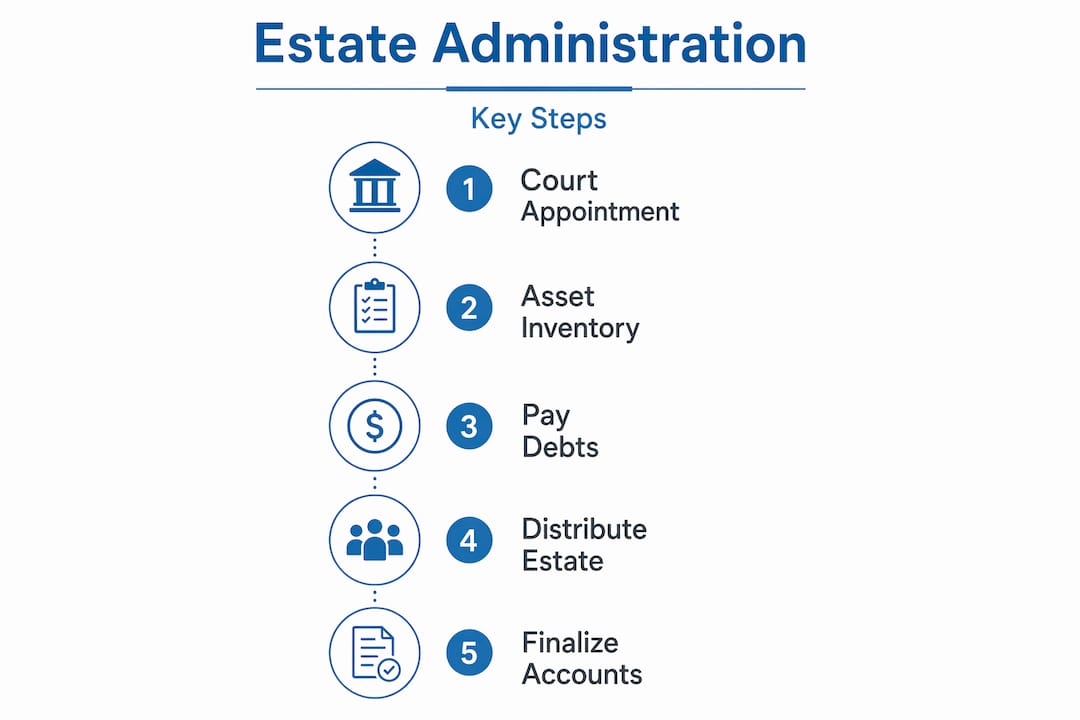
Once appointed, the estate administrator takes on a detailed and often demanding set of duties. Understanding these responsibilities upfront helps you avoid mistakes that can create legal complications or personal financial exposure. The duties of an estate administrator generally follow this sequence:
Locate and secure all assets. This means identifying every bank account, investment, piece of real estate, vehicle, business interest, and personal item that belonged to the deceased. Nothing should be removed, sold, or transferred until you have formal authority to act.
Open a dedicated estate bank account. All estate funds must flow through a separate account. Commingling estate funds with your personal finances can trigger legal challenges and expose you to personal liability.
File an initial inventory. You are required to file an inventory of all estate assets, typically within three months of your formal appointment. Missing this deadline can result in court sanctions, including removal from the role.
Notify creditors. You must publish a legal notice to alert creditors of the death and open a claims period. Creditors notified via notice are given a standard window of around four months to submit claims against the estate.
Pay valid debts, taxes, and expenses. Once the creditor period closes, you settle legitimate debts in the correct legal order. Paying the wrong creditor first, or paying a beneficiary before all debts are cleared, can make you personally liable for any resulting shortfall.
Maintain estate property. If the estate includes real property, it must be kept in reasonable condition throughout the administration. This includes paying insurance, rates, and utilities as required to preserve the asset’s value.
Distribute the remaining assets. After debts and taxes are paid, you distribute what remains to heirs according to the rules of intestacy. These statutory rules dictate who inherits and in what proportion when there is no will.
File a final accounting. Before the estate can be formally closed, you must submit a detailed account of every financial transaction made during administration. The court or beneficiaries review this record before approving distribution.
Pro Tip: Keep every receipt, bank statement, letter, and correspondence related to the estate in one organised folder. Your final accounting will be far easier to prepare, and you will have a clear paper trail if any beneficiary questions your decisions.
Timelines and key milestones
One of the most common sources of stress for new administrators is not knowing how long the process takes or when key steps must happen. The table below provides a general framework. Specific deadlines vary by jurisdiction, so always confirm requirements with a qualified solicitor.
| Stage | Typical timeframe |
|---|---|
| Court appointment and letters of administration | Weeks 1 to 8 |
| Initial inventory filed | Within 3 months of appointment |
| Creditor notice published and claims period open | Months 2 to 6 |
| Debts and taxes paid | Following creditor claims period |
| Final accounting prepared and filed | Months 12 to 24 |
| Assets distributed to beneficiaries | Months 12 to 24 |
The overall duration of administration typically falls between 9 months and 2 years, depending on the size and complexity of the estate, the number of beneficiaries, and whether any disputes arise. A straightforward estate with minimal assets and cooperative heirs may close well within 12 months. An estate involving contested property, business interests, or uncooperative beneficiaries can stretch considerably longer.

Missing key deadlines has real consequences. Failing to file the inventory on time can result in the court removing you as administrator. Delaying creditor notices can expose the estate to additional claims. Rushing to distribute assets before debts are fully settled can leave you personally responsible for any unpaid obligations.
Legal liabilities every administrator should understand
The role of estate administrator is not simply an administrative task. You are a fiduciary, which means the law holds you to the highest standard of care and loyalty. Administrators must prioritise beneficiaries’ interests above their own and maintain absolute transparency in every decision they make.
The practical implications of this duty are significant:
- You cannot use estate funds for personal benefit, even temporarily
- You must not favour one beneficiary over another unless the law expressly requires a priority
- You are personally liable if you distribute assets prematurely, pay creditors in the wrong order, or fail to preserve estate property
- You have no authority to act before your court appointment is formally granted. Acting before appointment risks legal complications that can undermine the entire administration
Many administrators are surprised to learn that good intentions are not a legal defence. If you make an honest mistake that causes a financial loss to the estate, you may be required to cover that loss from your own funds. This is not meant to discourage you from accepting the role. It is meant to underscore why getting the process right matters so much.
Pro Tip: Before taking any action with estate assets, confirm with a probate lawyer in Sydney that your letters of administration are in order. Acting even a day early can create problems that take months and considerable expense to resolve.
Administrators also represent the interests of creditors, not just beneficiaries. You are required to deal with creditors honestly and in accordance with legal priority rules. Hiring a probate attorney is widely considered one of the most effective ways to protect yourself from inadvertent mistakes during this process.
Practical tips for managing the process well
Managing an estate effectively comes down to organisation, communication, and patience. Here are the habits that make the biggest difference:
- Document everything from day one. Start a dedicated file the moment you are appointed. Record every phone call, decision, and transaction with dates and details.
- Communicate regularly with beneficiaries. Keeping heirs informed reduces suspicion and prevents disputes. You do not need to share every legal document, but regular updates on progress go a long way.
- Understand your tax obligations. The estate may have outstanding income tax returns to file, and there may be tax implications for the distribution itself. Engage an accountant early if the estate has any complexity.
- Seek professional advice sooner rather than later. The estate administration process involves legal, financial, and sometimes property-related decisions. Lawyers and accountants can identify issues before they become costly problems.
- Pace yourself. Administration takes months. Rushing decisions to close the estate quickly is one of the most common causes of errors and disputes.
My perspective on what this role actually demands
I have seen many families step into the administrator role with the best intentions and still find themselves overwhelmed within the first few weeks. The reason is almost always the same: they did not realise the role carries genuine legal weight, not just administrative duties.
What strikes me most is how often people assume they can start managing the estate immediately after a death. That assumption is understandable. You are grieving, there are urgent practical matters to address, and waiting feels impossible. But acting before formal appointment is one of the most consequential mistakes an administrator can make. It can invalidate transactions, expose you to personal liability, and create disputes that damage family relationships for years.
In my experience, the administrators who handle this role most effectively share a few common traits. They ask questions early. They keep records obsessively. They do not try to manage complex estates alone. And they remain patient even when beneficiaries are pressing for faster action.
The emotional dimension of this work is real and often underestimated. You are managing a legal process while also grieving. That combination is genuinely difficult, and there is no shame in acknowledging it. Transparency with the people around you, combined with proper legal guidance, is the most reliable path through.
— Gaurav
How GKE Lawyers can help you through this process
If you are facing the responsibility of administering an estate in New South Wales, you do not need to navigate it alone.

GKE Lawyers is a full-service Sydney law firm with dedicated expertise in wills and estate administration. Our team helps administrators understand their legal obligations, apply for letters of administration, manage creditor notices, and complete the final accounting and distribution process. We also assist with the property-related aspects of estates, including transfers and sales under our property law services. Whether you are just starting the process or have hit a difficult point mid-administration, our solicitors can provide clear guidance tailored to your situation. Contact GKE Lawyers to arrange a consultation and take the guesswork out of estate administration.
FAQ
What is the difference between an executor and an administrator?
An executor is named in a will by the deceased, while an administrator is appointed by a court when there is no will or the executor is unavailable. Both roles carry the same fiduciary duties once formally authorised.
When can an estate administrator start acting?
An administrator can only act after receiving a formal court appointment and the grant of letters of administration. Acting before that point carries significant legal risk and can complicate the entire estate process.
How long does estate administration typically take?
Estate administration generally takes between 9 months and 2 years, depending on the estate’s size, the number of beneficiaries, and whether any disputes arise among heirs or creditors.
Can an administrator be held personally liable?
Yes. Administrators can be held personally liable for losses caused by errors such as premature distributions, incorrect creditor payments, or failure to maintain estate assets properly.
Do I need a lawyer to administer an estate?
While you are not legally required to engage a solicitor, doing so is strongly advisable. A probate lawyer helps you meet all legal deadlines, avoid personal liability, and manage complex decisions with confidence.