
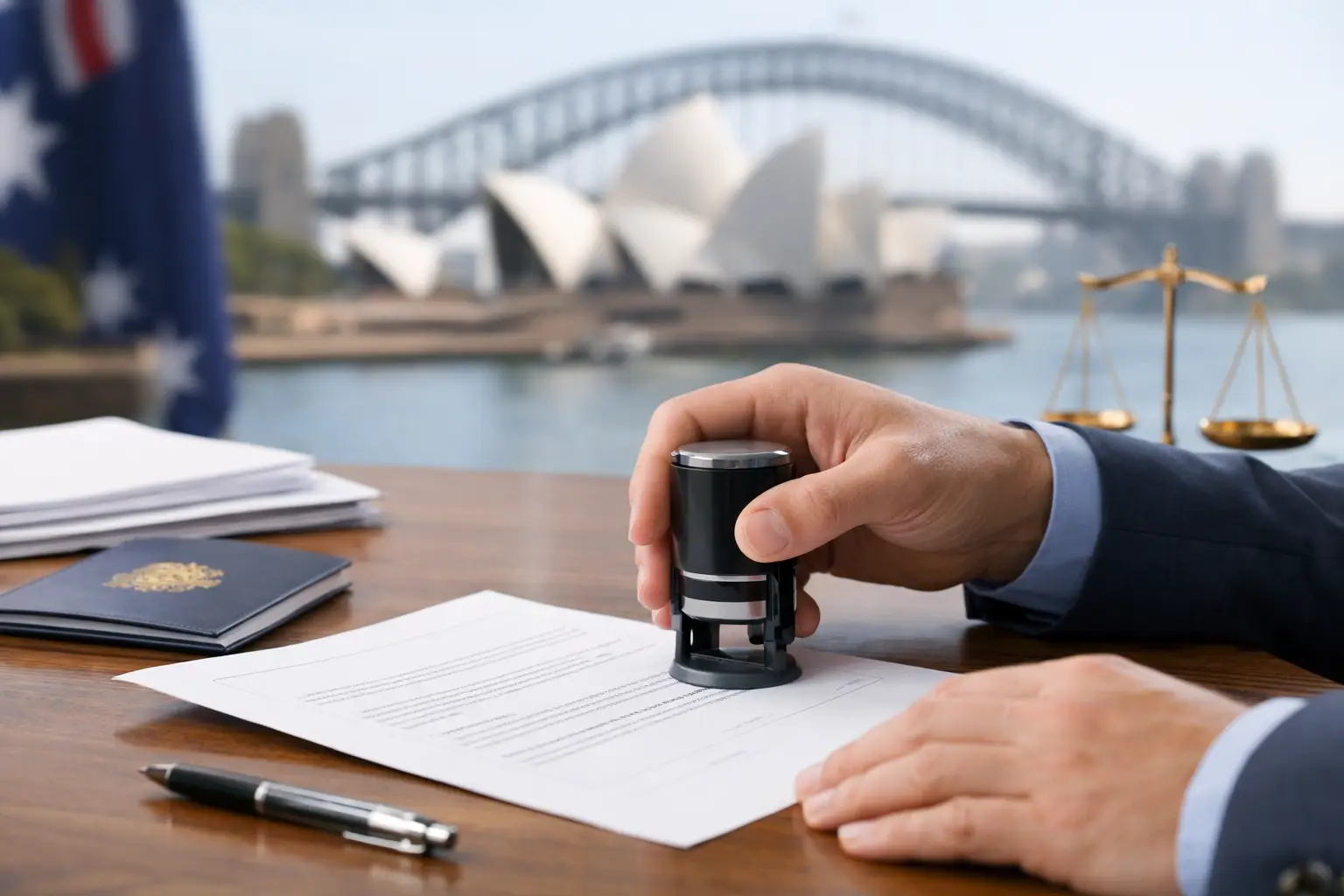
A rejected document can hold up a property settlement, visa application, bank request or estate administration for reasons that seem minor: the certifier did not sight the original, the wording was incomplete, or the receiving organisation needed notarisation rather than a certified copy. Knowing how to certify documents correctly helps avoid that delay.
In New South Wales, certification is usually straightforward, but it is not a one-size-fits-all process. The organisation receiving the document sets the requirements. Before arranging certification, check exactly what it needs, who it will accept as a certifier, and whether it requires every page to be certified.
What does certifying a document mean?
A certified copy is a photocopy or printed copy of an original document that an authorised person has compared with the original. By signing it, the certifier confirms that the copy is a true and accurate copy of the document they have seen.
Certification does not prove that the original document is genuine, current or legally effective. It only confirms that the copy matches the original presented at the time. This distinction matters where documents are being used for finance, litigation, identity checks or overseas transactions.
For example, a certified copy of a passport confirms that the copy reflects the passport shown to the certifier. It does not replace a formal identity-verification process required by a bank or government agency.
First, confirm what the receiving organisation requires
The safest first step is to read the instructions from the organisation requesting the documents. A real estate agent, lender, university, insurer, court, overseas authority or government department may each have different rules.
Ask whether they need a certified copy, an original document, a witnessed signature, a statutory declaration, or a notarised document. These are different services. A document may be properly certified and still be refused if the recipient required a notary public or an apostille for use overseas.
Also check whether there is a time limit. Some organisations only accept certified copies completed within the previous three, six or 12 months. Others require particular wording, a stamp, the certifier’s professional registration number, or certification on every page.
Who can certify documents in NSW?
The person who can certify a document depends on the recipient’s requirements. In NSW, a Justice of the Peace is commonly used for certified copies. Many organisations also accept a lawyer, notary public, police officer, pharmacist, medical practitioner, teacher, accountant, bank officer or another prescribed professional.
However, a person’s occupation alone does not automatically make them acceptable to every recipient. Some organisations maintain their own list of approved certifiers. For instance, a lender may accept a solicitor or JP but not every professional listed in another agency’s policy.
A NSW Justice of the Peace performs their role under the Justice of the Peace Act 2002 (NSW). JPs provide an important community service, but availability can vary and they cannot give legal advice simply because they are witnessing or certifying documents.
Where documents relate to a legal transaction, a dispute, an estate, a company matter or international use, having a lawyer assess the broader requirement can prevent an avoidable mistake.
How to certify documents correctly: the practical process
Bring the original document and a clear copy to the appointment. Do not bring only a photo on your mobile or a scan unless the receiving organisation has specifically approved an electronic process. The certifier must be able to compare the copy against the original.
The certifier should inspect the original, compare it with the copy, and ensure all relevant pages are complete and legible. They should then write or stamp an appropriate certification statement on the copy. A commonly accepted form of wording is:
> I certify that this is a true copy of the original document sighted by me.
The certifier should then sign and date the copy, and include their full name, qualification or authority to certify, and contact details or registration number where required. If the document has multiple pages, the recipient may require the certifier to sign or initial each page, or certify each page separately.
There is no benefit in guessing the wording. If the receiving organisation supplies a form or prescribed statement, use that wording exactly. A small variation may be harmless in some settings but cause rejection in others.
Keep the original in view
A proper certification must be based on the original document. Do not email a scan to someone and ask them to certify it later. Do not ask a certifier to sign copies they have not compared with the original. Apart from being unreliable, this can expose the certifier and the person presenting the document to serious consequences.
If the original is damaged, partly illegible or appears altered, explain this before certification. The recipient may need a replacement original, an official extract, or further evidence rather than a certified copy.
Make copies that are complete and readable
A copy that cuts off an edge, obscures a photograph, misses the reverse side of an identity card or reproduces coloured security features poorly can create problems. Use clear copies and include both sides where there is information on both sides.
For passports, licences and similar identification, check whether the recipient requires the photo page only, the signature page, visa pages, or a full copy. Certifying unnecessary pages can cost time, while omitting a required page can delay the matter.
Certification, witnessing and notarisation are not interchangeable
These terms are often used as though they mean the same thing. They do not.
Document certification confirms that a copy matches an original. Witnessing confirms that a person signed a document in the witness’s presence. A witness may need to verify the signer’s identity, but the precise requirement depends on the document. Notarisation is performed by a notary public and is often required for documents to be used outside Australia.
For overseas use, a foreign authority may also require an apostille or authentication through the Australian Government after notarisation. The correct pathway depends on the destination country and the document’s purpose. A certified copy from a JP is often insufficient for an overseas land transaction, foreign power of attorney or international corporate document.
Similarly, a statutory declaration is a written statement declared to be true before an authorised witness. Certifying an attachment to a statutory declaration does not turn the declaration itself into a validly witnessed declaration.
Common mistakes that lead to rejected documents
Most rejected certifications can be avoided with a few careful checks. The recurring issues are:
- certifying from a scan, screenshot or photocopy rather than the original document;
- using a person who is not accepted by the receiving organisation;
- leaving out the certifier’s name, authority, signature or date;
- certifying only one page when all pages, including reverse sides, are required; and
- treating a request for notarisation or witnessing as a request for a certified copy.
Another common issue is signing a document before attending the appointment. This is particularly risky for deeds, statutory declarations, powers of attorney and documents that have specific witnessing rules. Unless the document clearly permits advance signing, wait until the authorised witness tells you to sign.
When legal advice is worth obtaining
A simple certified copy of a driver licence may only require a quick appointment with an accepted certifier. More care is needed when the documents affect property rights, family arrangements, company authority, estate administration, court proceedings or an overseas transaction.
For property matters, for example, an identity document may be only one part of a broader verification of identity process. Certification alone may not satisfy the requirements of a conveyancer, lender or electronic conveyancing platform. The consequences of getting it wrong can be far greater than the inconvenience of obtaining a new copy.
GKE Lawyers can assist with document witnessing, certification and notarial services, while also identifying whether your particular matter calls for something more than a certified copy. Clear advice at the start can protect a transaction from unnecessary delay.
Before you book an appointment, gather the originals, make clear complete copies, and keep the recipient’s written requirements with you. That small amount of preparation gives the certifier what they need and gives your documents the best chance of being accepted the first time.